Southern Flying Squirrel Removal & Attic Exclusion – Guilford County and surrounding areas
Hearing soft scratching, scurrying, or chittering noises in your attic at night? Southern flying squirrels—North Carolina’s smallest squirrel species—are nocturnal gliders that frequently invade homes and buildings. Often called “flyers,” these tiny rodents glide between trees and can slip through surprisingly small gaps to nest in attics, especially during cooler months when they seek warmth and shelter.
At WildlifeEviction, we specialize in humane, effective southern flying squirrel trapping, removal, damage repair, and exclusion to safeguard your home from hidden dangers. Act quickly—don’t let these quiet invaders cause costly damage or serious risks.
Call today! Our licensed team serves Guilford, Rockingham, Forsyth, and Alamance Counties with prompt, professional service.
Identifying Southern Flying Squirrels in Your Home
Southern flying squirrels (Glaucomys volans) are much smaller than gray squirrels:
- Size: 8½ to 9⅞ inches long (including a 3–4 inch tail) and weighing just 2–3 ounces.
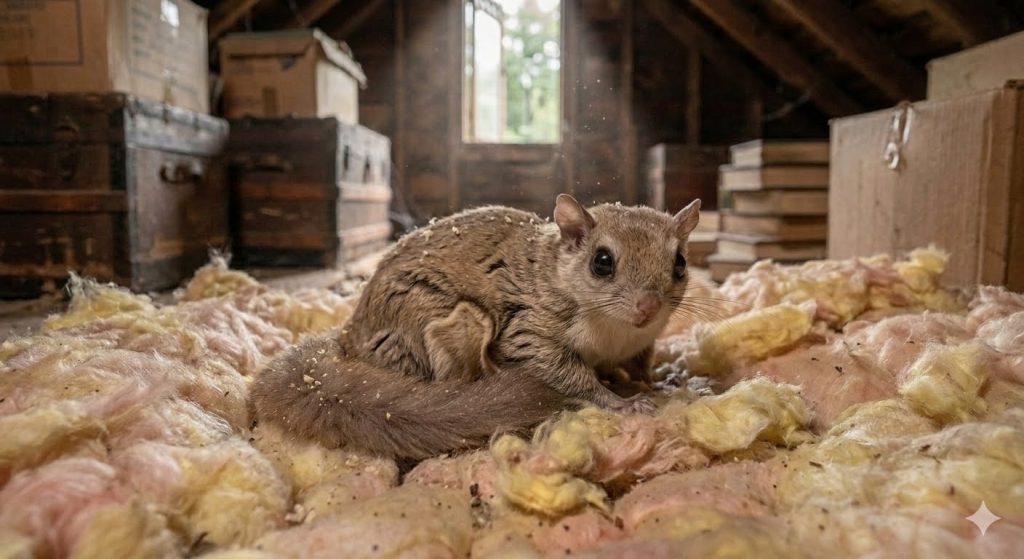
- Appearance: Soft gray-brown fur with a white belly, large dark eyes for night vision, and a furry membrane (patagium) that stretches from wrists to ankles for gliding.
- Activity & Signs: Nocturnal—most noises occur at night. Listen for light scratching, rapid scurrying, or high-pitched chattering. Other clues include small droppings (rice-sized), urine stains on insulation, chewed entry points, or sightings gliding from trees to your roof at dusk.
They enter through tiny construction gaps (small openings along rooflines, soffits, or eaves left during building) or areas of disrepair like damaged vents, loose siding, or weathered trim—gaps as small as 1½ inches are enough!
The Serious Risks Flying Squirrels Pose
Though small and cute, southern flying squirrels can cause significant issues when they take up residence:
- Fire Hazards: Like other squirrels, they chew constantly to file down their ever-growing teeth—often on electrical wiring. Exposed or damaged wires create a major risk of shorts, sparks, and attic fires.
- Insulation & Structural Damage: They shred insulation for nests, reducing energy efficiency and leading to higher utility bills. Droppings and urine contaminate insulation, introducing bacteria, mold, and potential health risks (respiratory issues, allergens) for your family.
- Population Growth: Females can have multiple litters per year, turning one squirrel into a colony quickly if not addressed.
Ignoring nocturnal attic activity often leads to escalating damage and expensive repairs.
Our Humane Southern Flying Squirrel Removal Process
WildlifeEviction uses state-approved, humane methods in full compliance with North Carolina Wildlife Resources Commission regulations (including any required depredation permits). We avoid poisons and prioritize animal welfare.
- Comprehensive Inspection: We identify entry points, nesting areas, and damage in your attic, roofline, and exterior.
- Effective Trapping & Removal: Live traps placed strategically to capture all squirrels (including young) safely for humane relocation.
- Professional Exclusion: Seal every potential entry point with durable, animal-proof barriers (metal mesh, custom-fitted vents, reinforced soffits) to prevent future invasions.
- Prevention Guidance: Tips on trimming overhanging branches, securing food sources, and maintaining your home to keep flyers out.
We deliver a complete, long-term solution—squirrels removed, home protected, and your peace of mind restored.
Protect your home from hidden nocturnal invaders—don’t wait for damage to worsen. Contact WildlifEviction today for southern flying squirrel removal, attic restoration, and exclusion.

